 how to not give a fuck
economics 101
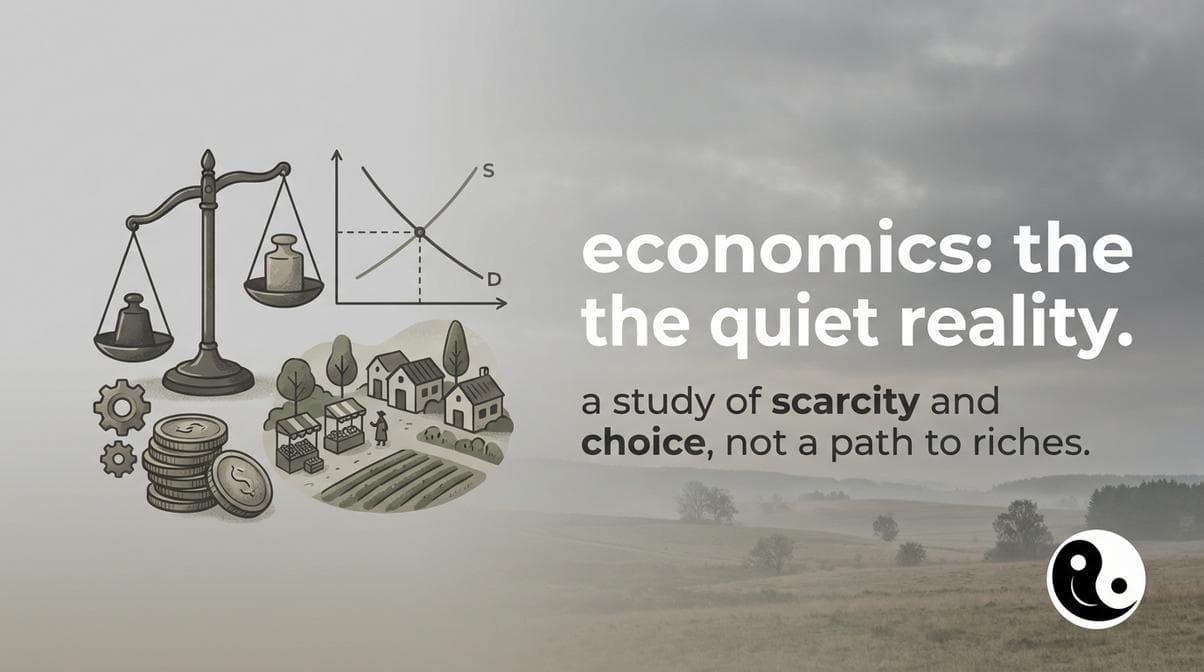
you use money every single day. you worry about it. you argue about it. you organize your entire life around it. but do you actually understand how it works? not budgeting -- the actual system. where money comes from, why economies boom and bust, and why the rules seem to favor certain people.
the education gap nobody mentions
school taught you algebra you'll never use but said almost nothing about the financial system that governs your entire adult life. that's not an accident. financial illiteracy benefits the institutions that profit from your confusion.
if you don't understand how money is created, how interest rates work, how inflation erodes your purchasing power, and how debt is used as both a tool and a trap -- you're playing a game where you don't know the rules. and people who don't know the rules lose.
the basics that change everything
- money creation: most money isn't printed by governments. it's created by banks through lending. when a bank gives you a mortgage, that money didn't exist before. understanding this changes how you think about debt, banking, and the entire monetary system
- inflation: your money loses value every year. the dollar buys less tomorrow than today. this is why keeping all your savings in cash is a slow-motion loss
- boom and bust cycles: economies expand through credit, overheat through speculation, and contract through deleveraging. this isn't a mystery -- it's a pattern that repeats throughout history. understanding the cycle helps you time major financial decisions
- different economic systems: capitalism, socialism, mixed economies -- each has tradeoffs. knowing what those are helps you evaluate political claims instead of just picking a team
where to start
watch ray dalio's "how the economic machine works" -- it's 30 minutes and explains more about economics than most college courses. read "the psychology of money" by morgan housel for the behavioral side. then follow a few economists who explain current events in plain english.
your assignment
spend one hour this week learning about one economic concept you don't understand. just one. then notice how it changes the way you read the news, evaluate job offers, or think about your savings.
financial literacy isn't optional. it's self-defense.
if this resonated, share it with someone who needs to hear it.