 how to not give a fuck
plan b
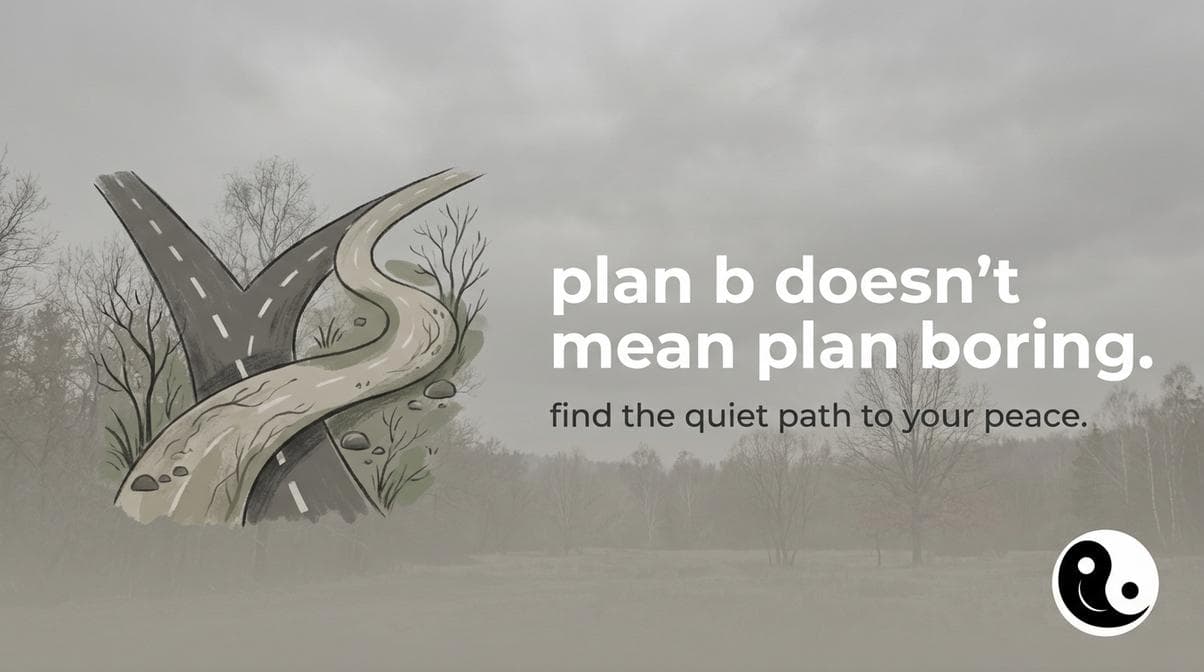
the plan b paradox
here's the tension nobody talks about: having a backup plan can undermine your commitment to the original plan, but having no backup plan can leave you devastated when things go wrong. the answer isn't picking one extreme — it's understanding when each applies.
why 99% of your energy belongs to plan a
research on goal commitment shows that people who invest in backup plans often perform worse on their primary goals. it makes sense. if part of your brain is already planning the escape route, it's not fully engaged in the mission. you can't sprint toward a finish line while simultaneously eyeing the exit.
most of the time, plan A deserves everything you've got. your business idea, your career pivot, your creative project — go all in. burn the boats. that level of commitment is what separates people who talk about doing things from people who actually do them.
but that 1% matters
there are moments — rare but real — when having a mental failsafe prevents catastrophic decisions. knowing that you could move back in with family if the startup fails. knowing that your old industry would take you back if the career change doesn't pan out. this isn't weakness. it's the quiet confidence that lets you take bigger swings.
the key word is "quiet." your plan B should live in the back of your mind, not on a vision board. it's a safety net you know exists, not a detailed blueprint you actively maintain.
the practical approach
acknowledge your worst-case scenario once. know what you'd do. then put it in a mental drawer and close it. return all of your focus to plan A. the safety net is there if you fall. but you're not going to fall, because you're not looking down.
if this resonated, share it with someone who needs to hear it.