 how to not give a fuck
stimulus vs response
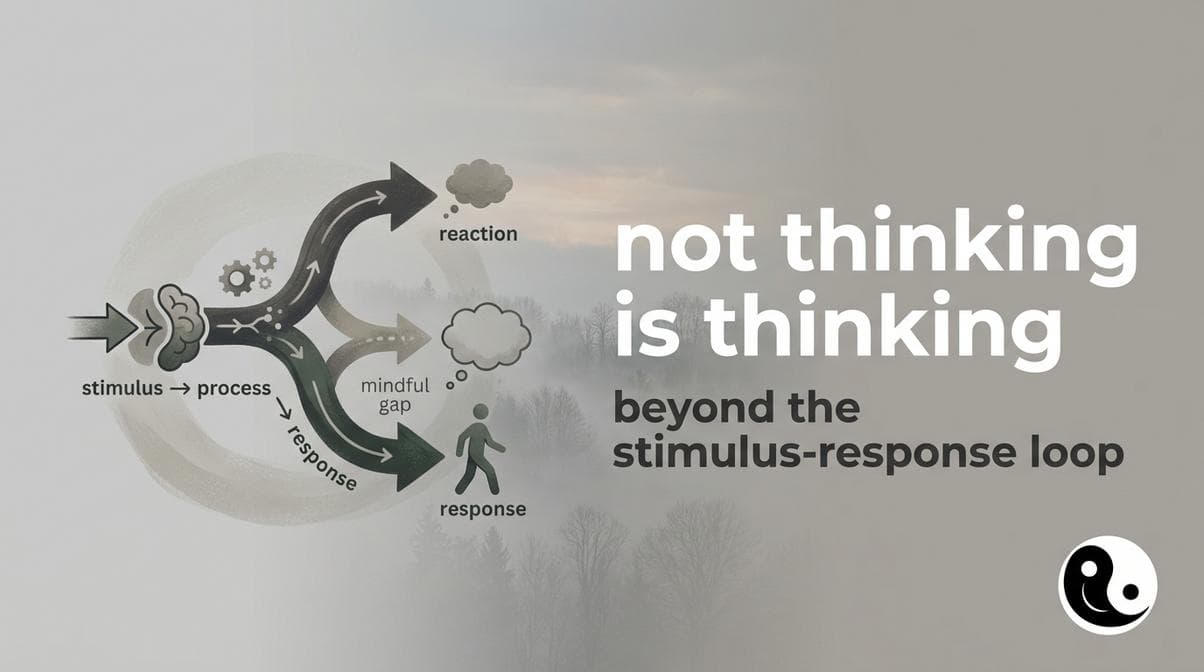
someone cuts you off in traffic. your boss sends a passive-aggressive email. a stranger says something rude. in each case, your reaction feels instant and automatic. but it isn't — and that tiny space between what happens to you and how you respond is where your entire freedom lives.
frankl's discovery
viktor frankl survived the nazi concentration camps and came out with one of the most powerful insights in human psychology: "between stimulus and response there is a space. in that space is our power to choose our response. in our response lies our growth and our freedom."
if a man in auschwitz can find that space, you can find it when someone is rude to you at the grocery store.
identifying your patterns
start paying attention to your automatic reactions. when you feel anger, anxiety, or frustration flare up — pause. what was the stimulus? what is the response your body wants to default to? and most importantly — is that response actually useful?
most of your automatic reactions were programmed in childhood. they were appropriate for a five-year-old with no power. they're probably not appropriate for an adult who has choices.
building the gap
the space between stimulus and response isn't fixed — you can expand it. meditation helps. so does journaling. even just taking three slow breaths before responding to anything emotionally charged creates a pause that didn't exist before.
the more you practice finding this gap, the wider it gets. eventually, you stop being a person who reacts and become a person who responds. that distinction changes everything.
your experiment
for one day, notice every time you have an emotional reaction to something external. don't try to change it — just notice it. name the stimulus. name the response. observe the gap, no matter how tiny it is. that observation alone begins to expand it.
the goal isn't to become emotionless. it's to become intentional. you can still be angry — but it's anger you chose, not anger that chose you.
if this resonated, share it with someone who needs to hear it.