 how to not give a fuck
the procrastination equation
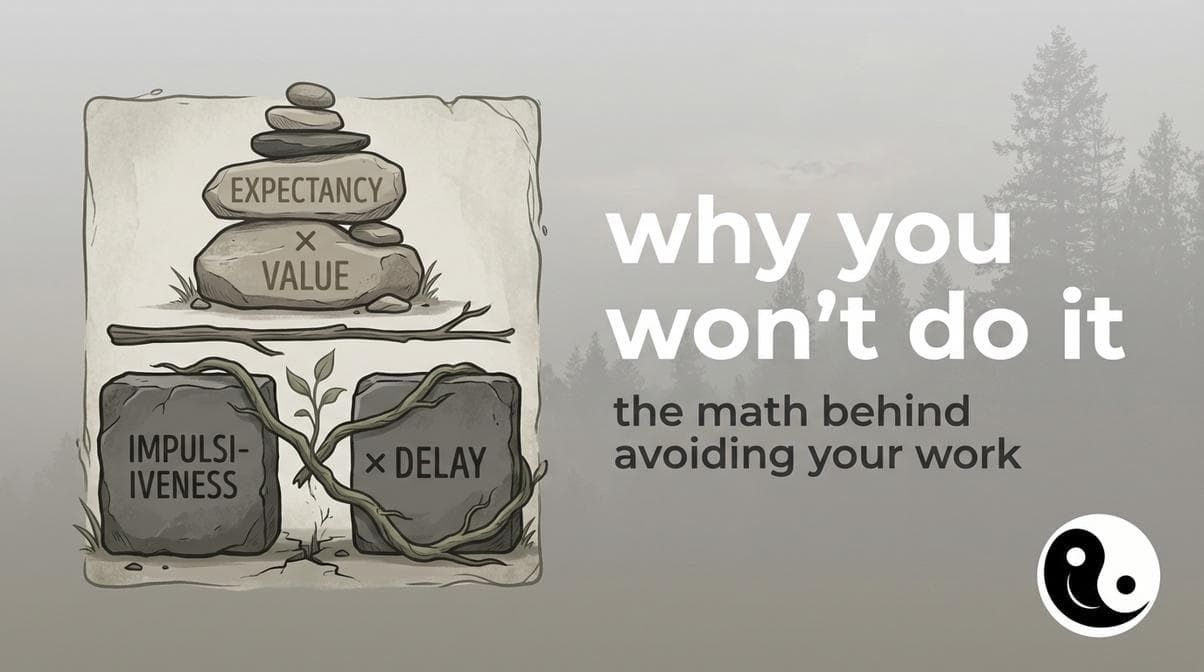
there's an actual equation for procrastination, and once you see it, you can't unsee it.
motivation = (expectancy x value) / (impulsiveness x delay)
piers steel, a researcher who spent years studying procrastination, distilled it into this formula. it's not perfect, but it explains about 80% of why you're scrolling your phone instead of doing the thing.
breaking it down
expectancy: how likely you think you are to succeed. low confidence = low motivation. if you don't believe you can do it, your brain won't waste energy trying.
value: how much you care about the outcome or enjoy the process. boring tasks with no clear payoff score low here.
impulsiveness: your tendency to get distracted. the higher your impulsiveness, the more motivation you need to overcome it.
delay: how far away the deadline or reward is. distant deadlines kill motivation. this is why you write the paper the night before.
hacking the equation
now it gets useful. you can manipulate each variable:
increase expectancy — break the task into pieces so small that success feels guaranteed. "write a book" is paralyzing. "write one paragraph" is doable. stack enough easy wins and your confidence builds.
increase value — pair the boring task with something you enjoy. listen to your favorite podcast while doing data entry. reward yourself after completing the hard thing. or find a way to make the task actually meaningful.
decrease impulsiveness — remove distractions before you start. phone in another room. browser blockers on. environment designed for focus, not willpower.
decrease delay — create artificial deadlines. tell someone you'll have it done by friday. set up accountability. bring the consequence closer to the present.
the counterintuitive strategy
sometimes the best move is to let procrastination work for you. when delay shrinks to near-zero (the deadline is tomorrow), motivation spikes naturally. some people do their best work under pressure because the equation tips in their favor at the last minute.
the goal isn't to eliminate procrastination. it's to understand the mechanics so you can choose which lever to pull when you need to move.
if this resonated, share it with someone who needs to hear it.