 how to not give a fuck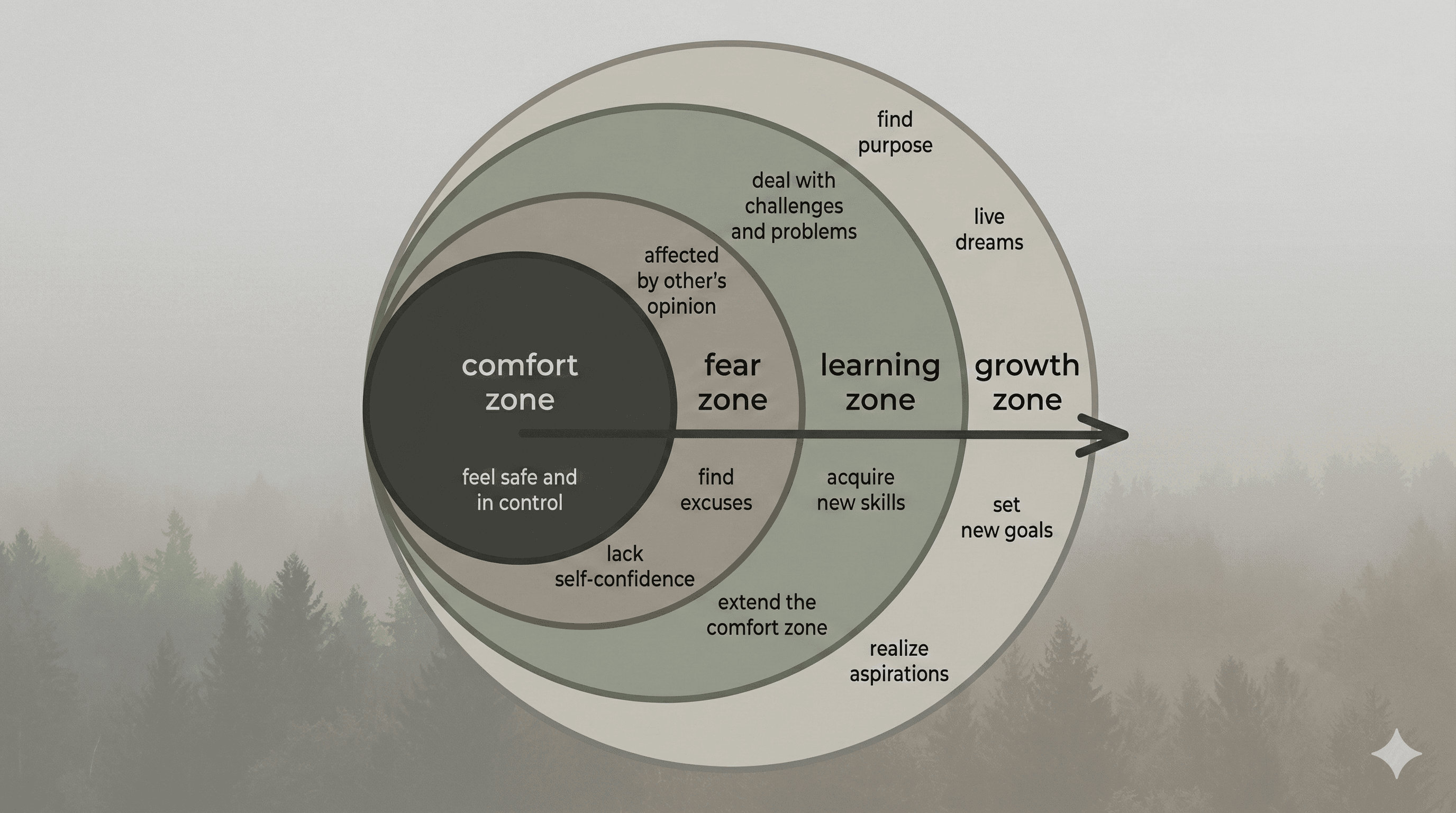
comfort is the enemy of growth
your comfort zone feels like safety. it's the routine you know, the conversations you can predict, the challenges you've already solved. nothing in there will hurt you.
nothing in there will change you, either.
comfort is where ambitions go to die quietly. not with a dramatic failure, but with a slow, painless erosion. you wake up one day and realize you've been doing the same thing for five years — not because it fulfills you, but because it's familiar. and familiar feels safe even when it's making you miserable.
the ancient stoics didn't worship comfort. seneca voluntarily practiced poverty — sleeping on a hard floor, eating simple food — not because he had to, but because he wanted to prove to himself that the things he feared losing couldn't control him. "set aside a certain number of days," he wrote, "during which you shall be content with the scantiest and cheapest fare, with coarse and rough dress, saying to yourself the while: is this the condition that i feared?"
you don't need to sleep on the floor. but you do need to ask yourself: what are you avoiding because it's uncomfortable?
the zones: comfort, fear, learning, growth
picture four concentric rings.
the comfort zone is the center. everything here is known. you're competent, safe, and utterly unchallenged.
the fear zone is the first ring outside comfort. this is where you feel resistance — anxiety, self-doubt, the voice that says "you can't do this" or "people will judge you." most people hit this zone and retreat back to comfort. that retreat feels like wisdom. it's not. it's just fear wearing a sensible disguise.
the learning zone is next. you've pushed through the fear and now you're acquiring new skills, facing real challenges, dealing with problems you haven't solved before. it's uncomfortable but productive. you're growing.
the growth zone is the outer ring. this is where you find new purpose, set meaningful goals, and live in alignment with who you're becoming rather than who you've been.
the path always goes through fear. there is no shortcut. no one has ever grown by staying comfortable. every meaningful experience you've ever had — your first day at a new job, a vulnerable conversation, learning something hard — required passing through the fear zone first.
fear as information, not instruction
fear isn't the enemy. it's a signal. the problem is that most people treat it as a command — "i'm afraid, therefore i must stop."
flip that. treat fear as information: "i'm afraid, which means this matters to me. what's on the other side of this?"
not all fear is equal. there's protective fear — the kind that tells you not to walk down a dark alley at 3am. respect that fear. it's keeping you alive.
then there's growth fear — the kind that shows up when you're about to do something meaningful. asking someone out. starting a business. having a hard conversation. sharing your work. this fear isn't protecting you from danger. it's protecting you from change. and change is exactly what you need.
the philosopher kierkegaard wrote that anxiety is "the dizziness of freedom." every time you face a choice that could change your life, you feel dizzy. that dizziness isn't a sign that you should sit back down. it's a sign that you're standing at the edge of something real.
learn to distinguish between the two kinds of fear. one is a stop sign. the other is a green light disguised as a stop sign.
small acts of courage
you don't conquer fear with one dramatic gesture. you erode it with small, consistent acts of courage.
speak up in a meeting when you'd normally stay quiet. have the conversation you've been avoiding. try the thing you've been "meaning to get around to" for three years. say no when you'd normally say yes out of obligation. say yes when you'd normally say no out of comfort.
each small act teaches your nervous system the same lesson: you survived. the fear said you wouldn't, and you did. do that enough times and the fear zone shrinks. not because you're fearless — fearlessness is a myth — but because your tolerance for discomfort grows.
the japanese martial arts concept of "kaizen" applies here — continuous improvement through small steps. you don't need to jump out of a plane. you need to make one uncomfortable phone call. then another. then another.
keep a courage log if it helps. write down one thing you did each day that scared you, even a little. over time you'll have evidence — tangible, undeniable evidence — that you are someone who moves toward fear instead of away from it.
the paradox of safety
here's the irony: the safest-feeling life is often the most dangerous.
when you avoid all risk, you don't eliminate fear — you intensify it. the comfort zone shrinks. things that wouldn't have scared you five years ago now feel impossible. the muscle of courage atrophies from disuse.
people who never take risks don't end up fearless. they end up fragile. one unexpected change — a layoff, a breakup, a health scare — and they shatter, because they have no practice recovering from discomfort.
meanwhile, people who regularly push through the fear zone build antifragility. nassim taleb's term — not just resilient (returning to baseline after stress) but antifragile (getting stronger because of stress).
the person who has started three businesses and failed twice isn't weaker than the person who never tried. they're exponentially stronger. they've been through the fear zone so many times it's practically a commute.
so the question isn't "how do i eliminate fear?" it's "how do i build a life where fear is a regular visitor instead of a paralyzing stranger?"
the answer is small, daily, unglamorous acts of courage. not the absence of fear, but the habit of walking through it anyway.